Identification and genetic characterization of ancient chestnut trees to obtain plant material of local varieties. December 2021
The LIFE Bears with Future project is going to plant 25,000 chestnut trees in bear areas in the Cantabrian Mountains to improve fruit production for the bear and biodiversity in general, contributing to the promotion of the chestnut tree and related socioeconomic development. Most of the trees to be planted will be grafted with local varieties, selecting those with greater interest due to their fruit production, phenology, resistance to diseases or climate change, and establishing in the plantations an adequate combination of different varieties and wild ungrafted chestnuts to ensure good pollination.
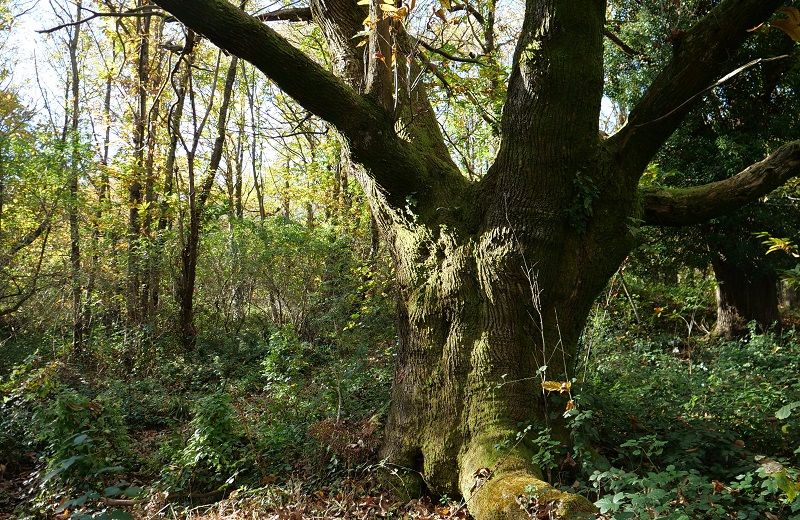
Old specimen of chestnut tree in Belmonte de Miranda (Asturias).
To collect plant material for grafting with all the guarantees of origin and identification, a selection, characterization and genetic analysis of ancient chestnut trees in the project area has been carried out. The team from the University of Oviedo led by Pedro Álvarez has located and genetically characterized 62 centenarian chestnut trees in protected natural spaces and Natura 2000 sites in the municipalities of Grado, Proaza, Quirós, Teverga, Lena, Belmonte, Somiedo, Ibias and Cangas, after meeting and talking with tree or land owners and collect the information that is still preserved about them. Chesnut trees of the Parede, Chamberga, Galliciana, Naveixa, Palaciana, Panchina, Pelona and Vaqueira varieties have been genetically identified, but in addition 30 trees have presented genetic results that are not compatible with registered varieties and that in many cases can correspond to lost varieties currently unknown, which may be recovered thanks to these works. Given the enormous interest of these results, characterization work will continue and the possibility of applying cultural care to the most degraded trees will be analyzed to guarantee their conservation.