Planted 17,000 trees throughout 2014 in the interpopulation corridor

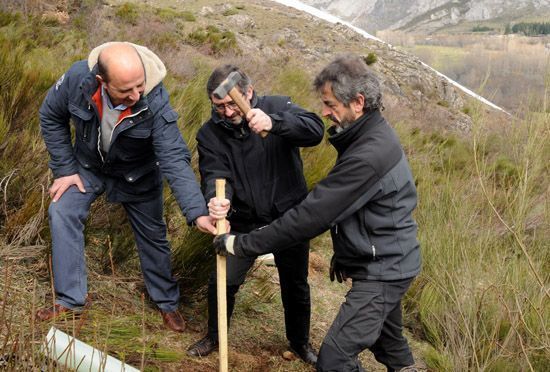
Last Monday, March 23, a visit was made to the plantations developed in the interpopulation corridor in the framework of the LIFE Project «Habitat Defragmentation for the Brown Bear in the Cantabrian Mountains». The visit was attended by the General Director of the Natural Environment of the Junta de Castilla y León, José Ángel Arranz, the mayor of La Pola de Gordón, Francisco Castañón, and the President of the Brown Bear Foundation , Guillermo Palomero.

LIFE Bear Defragmentation is a project coordinated by FOP and developed in cooperation with the Junta de Castilla y León. The project will be carried out until June 2016, mainly on the southern slope of the interpopulation corridor of the Cantabrian brown bear. Its total budget is 1,240,000 €, with the European Commission contributing 75% of the total. It is co-financed by Gas Natural Fenosa, the Junta de Castilla y León and the Ministry of Agriculture, Food and Environment, and with the support of the Principado de Asturias and the Leon municipalities of Los Barrios de Luna, Cármenes, La Pola de Gordón, Sena de Luna, Valdelugueros, Valdepiélago, Vegacervera and Villamanín.

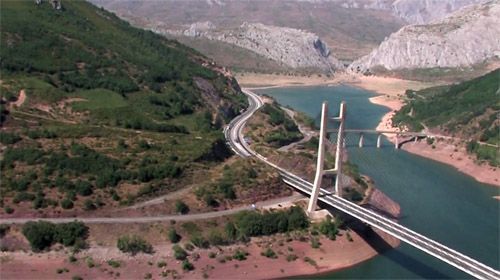
The project is based on a previous study of the habitat quality and connectivity in the corridor, which has allowed to locate the main black spots with greater habitat improvement needs. With an original approach, a network of 180 connectivity small forests are strategically planted in the corridors, composed by autochthonous trees producing food and shelter for the bear. In addition, another 32 coverage forests will be planted in the surroundings of the existing passages in the main highway crossing the corridor. The plantations are established considering the requirements of the brown bear, the ecological suitability and the compatibility with the uses of the territory. There will be 68,000 native trees of species such as whitebeam , rowan , cherry , alpine buckthorn , apple tree , alder buckthorn and birch .

To date, 17,000 trees have been planted in the municipalities of Sena de Luna, Los Barrios de Luna, La Pola de Gordón and Valdelugueros . The plants have been produced in the Forestry Nursery of the Junta de Castilla y León and, to a lesser extent, in the CIUDEN Forestry Nursery of the Autonomous Organism of National Parks, from seeds collected by the FOP in the region of origin and with its due phytosanitary passport and official certificate of origin.

Mars 2015


visita_LIFE_desfragmentacion_marzo2015

From left to right, Francisco Castañon, José Ángel Arranz and Guillermo Palomero planting a tree.
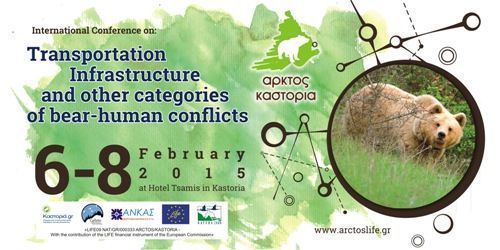
Participation in an International Conference on Transportation Infrastructure and other categories of bear-human conflicts

Between 6 and 8 February 2015 and International Conference on Transportation Infrastructure and other categories of bear-human conflicts has beeen hold in Kastoria , organized by the Western Macedonia Region and the conservationist organization Callisto , as a part of the project LIFE Arctos Kastoria “Improving conditions of bear-human coexistence in Kastoria Prefecture, Greece. Transfer of best practices”.

Organizers invited Brown Bear Foundation to participate in the conference, and Fernando Ballesteros, Life Bear Defragmentation manager, has assisted and presented the efforts of the Life project for the improvement of the connectivity between both Cantabrian bear subpopulations. In the conference, interesting discussions have been carried out between members and experts of different Life projects from Romania, Bulgaria, Italy and Portugal about infrastructure improvement for bear connectivity and traffic accidents prevention, use of livestock guardian dogs and other methods to prevent damage by bears and the importance of stakeholders and local communities implication in the development of coexistence between bears and humans.

 February 2015


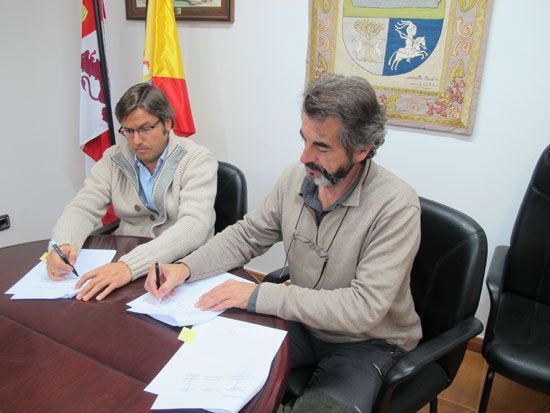
Signed Land Stewardship Agreements for the connectivity forest plantations

After an intense work of reconnaissance of the land and fruitful debates with proprietors, local councils and municipalities, at the end of 2014 the LIFE Defragmentation project has signed the first seven Land Stewardship Agreements for the plantation of the connectivity forests. The agreements have been signed with the local councils of Los Barrios de Gordón, Los Barrios de Luna, Cerulleda, Irede de Luna, Rabanal de Luna and Robledo de Caldas and with the municipalities of Los Barrios de Luna, Sena de Luna and Valdelugueros, all they in Leon.
These agreements establish a framework of cooperation to carry out the actions of native tree plantation in each area selected inside the interpopulation corridor of the Cantabrian brown bear and within Natura 2000 sites. They include the commitments of the boards or municipalities and local councils for the transfer of land, the promotion of information and participation among neighbors and the maintenance and conservation of plantations for at least the next 30 years, together with the commitments made by the Brown Bear Foundation to carry out the previously agreed plantations, guarantee their maintenance and care, and organize information and collaboration activities with neighbors.
This winter, plantations are being carried out following the recommendations of the technicians of the Junta de Castilla y León, and with the corresponding permits and authorizations. Land Stewardship is a tool that allows the owners and users of the territory to be involved in the conservation of natural resources through their collaboration with conservation organizations. FOP has been developing Land Stewardship for many years, sharing the ownership of bear mountains with the neighbors of the area and establishing agreements with hunters, owners and municipalities to improve the habitat of the brown bear.

December 2014


Convenio_Valdelugueros_Lifedesfrag

The mayor of Valdelugueros and the president of the FOP, at the signing of the agreement


Signed collaboration agreement with Polytechnic University of Madrid

Brown Bear Foundation has signed a collaboration agreement and an specific agreement with the Polytechnic University of Madrid with the aim of promote applied research and assessment of the brown bear conservation actions and specifically those related with connectivity between Cantabrian subpopulations.
With this agreements, the team of researchers Santiago Saura, María Cruz Mateo and Alfonso San Miguel, from the UPM Departments of Natural Resources and Forestry Management are going to participate in the LIFE Bear Defragmentation project developing and Action Plan for the Habitat Improvement and Management in the Interpopulation Corridor as a future Area of Permanent bear presence.

December 2014


La AFN quiere manifestar su apoyo a SEO/BirdLife

La AFN quiere manifestar su apoyo a SEO/BirdLife ante las críticas de la ONC y otros colectivos de cazadores por el comienzo de un proceso participativo para definir el posicionamiento interno ante la caza.

La Asociación de Fundaciones Privadas de Conservación de la Naturaleza , ante las críticas al desarrollo de un proceso interno de una organización de la sociedad civil, no vemos razones para esas críticas y las llamadas al boicot al proceso de participación que ha iniciado SEO/Birdlife para definir el posicionamiento final de esta entidad en torno a la caza, ni las vemos para pedir la dimisión de la directora ejecutiva, Asunción Ruiz, a la que apoyamos sin fisuras.

Ante la difusión de la invitación a participar en un Barómetro de opinión, la Oficina Nacional de la Caza, la Conservación y el Desarrollo Rural , que representa a un sector amplio de cazadores y a diferentes colectivos cinegéticos, ha acusado a SEO/Bird/Life de emprender una campaña anticaza de nulo rigor y sin carácter científico y ha pedido la dimisión de su directora ejecutiva. Sin embargo, consideramos que se trata de un proceso que se ha abierto de forma voluntaria, totalmente ejemplar, respetable y apropiado para definir su posición interna.

La participación comienza con un barómetro abierto a toda la ciudadanía y en el marco de un procedimiento dialogado. Para facilitar el proceso, el Comité Científico de SEO/Birdlife ha elaborado un “documento de posición” donde se recogen las condiciones que debería cumplir la caza para ser compatible con otros usos del territorio, y especialmente con la conservación de las poblaciones de aves silvestres y sus hábitats.

Este documento no puede ser tachado de contrario a la caza, y sí de favorable a una caza sostenible que no comprometa la integridad y viabilidad de las poblaciones silvestres y de los sistemas que las sostienen, como podría reclamarse en relación a otras actividades económicas y sociales.

Mejor que confrontaciones airadas que no conducen a ninguna parte se debería practicar lo que la propia ONC sugiere: sentarse a dialogar sobre el papel de la caza buscando los mejores consensos. Algunas fundaciones de la AFN -y como también ha hecho la propia SEO- vienen trabajando desde hace tiempo con los colectivos de cazadores y juntos han dado pasos de gigante en la recuperación de nuestras especies más emblemáticas y en peligro de extinción. En estos casos, cazadores y conservacionistas han encontrado objetivos comunes, han debatido con argumentos las discrepancias y han puesto en marcha hojas de ruta conjuntas. Este es el camino y no el de echar leña al fuego de la confrontación.

La FOP es miembro de la Asociación de Fundaciones Privadas de Conservación de la Naturaleza .