
This website uses cookies so that we can provide you with the best user experience possible. Cookie information is stored in your browser and performs functions such as recognising you when you return to our website and helping our team to understand which sections of the website you find most interesting and useful.
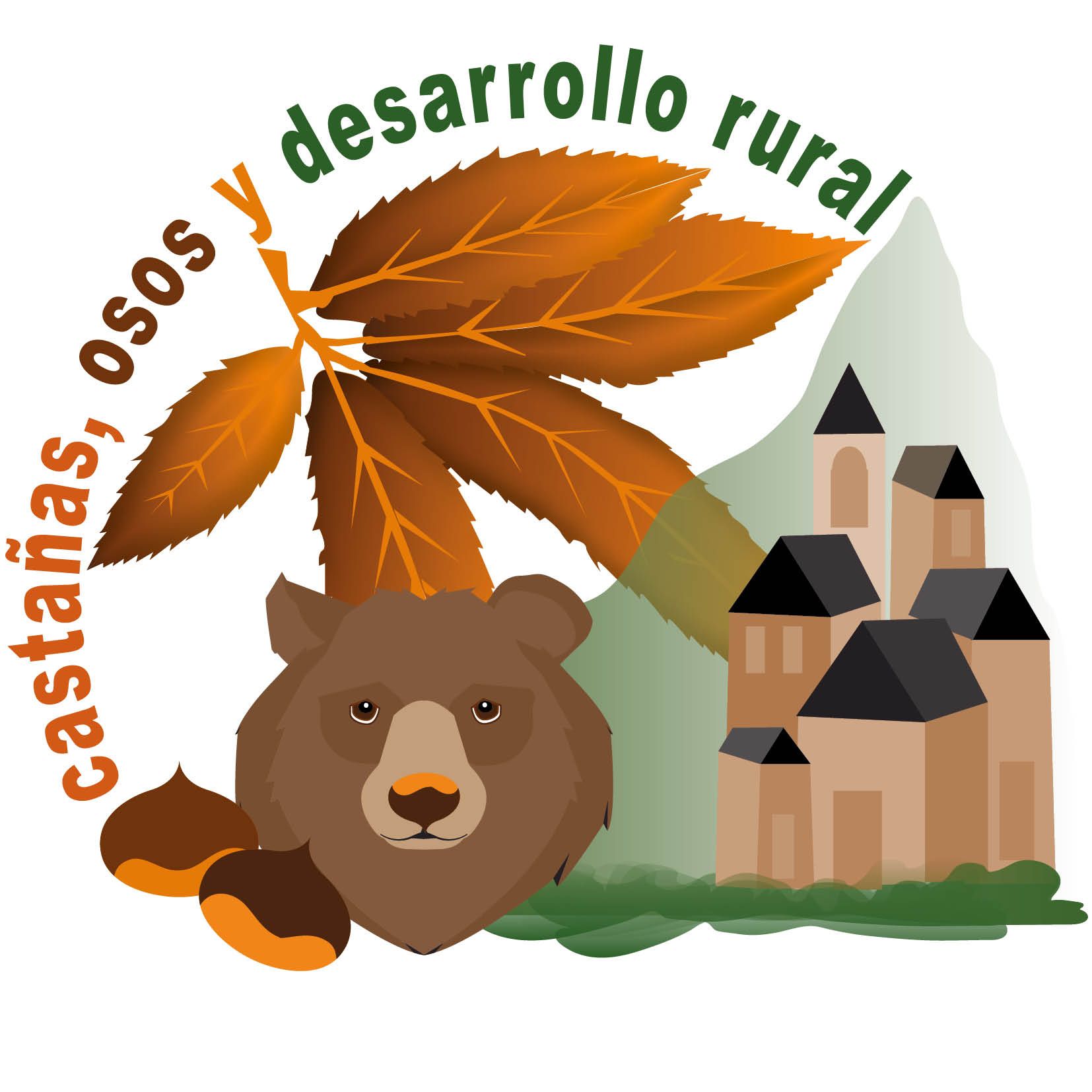
The project «Chestnuts, Bears, and Rural Development» aims to recover, expand, and enhance the traditional chestnut orchards of the Cantabrian Mountains to generate bioeconomy and rural development and contribute to the conservation of the brown bear and biodiversity. Coordinated by the Brown Bear Foundation (FOP), project partners include the University of Oviedo, SEO/BirdLife, the Asturias Bear Foundation, and the Lebaniego Path Foundation, and it will be developed with the collaboration of Principality of Asturias and Caja Rural de Asturias Foundation until December 2025.
The project is supported by the Fundacion Biodiversidad of the Ministry for Ecological Transition and the Demographic Challenge (MITECO) in the framework of the Recovery, Transformation and Resilience Plan (PRTR), funded by the European Union – NextGenerationEU.

Recovering Chestnut Orchards
Recovering a natural and cultural treasure of the Cantabrian Mountains
Chestnut orchards are a perfect example of harmony between human activities and nature conservation, a cultural landscape that benefits and promotes biodiversity. However, chestnut orchards are highly threatened in the Cantabrian Mountains: rural depopulation, socio-economic changes in recent decades, and diseases and pests have led to the progressive abandonment of traditional cultural management practices, resulting in their degradation and a reduction in chestnut production and quality.
Chestnut Orchards and the Brown Bear
In autumn, bears roam the forests in search of nuts such as acorns, a vital source of fat for the winter. Unlike Cantabrian oaks and beech trees, whose production varies each year, the chestnut tree yields a constant crop. It is expected that climate change will favour its development and fruiting in currently less viable areas and at higher altitudes. Therefore, chestnut orchards play a key role in the future of the brown bear.
Bioeconomy and Rural Development
Chestnuts are a healthy food and a high-value forest product, utilised for centuries by the inhabitants of the Cantabrian Mountains. The recovery of old chestnut orchards and the creation of new plantations are great opportunities to generate bioeconomy, employment, and rural development in the Cantabrian mountains.
Objectives
Project Objectives
The general objective of the project is to contribute to the recovery, expansion, and enhancement of traditional fruit-bearing chestnut orchards in the bear areas of the Cantabrian Mountains as ecosystems that generate bioeconomy, green employment, and rural development. These landscapes will be of great interest to the brown bear and biodiversity as a whole.

108
hectares of traditional chestnut orchards in bear areas, including 5,000 old chestnut trees, recovered for fruit production

12000
Chestnut trees planted in 30 hectares in bear areas, mostly grafted with local varieties

29
Land Stewardship Agreements or collaborations signed with public and private landowners

25
Local women and men trained, capacitated, and hired for project activities

5
Theoretical-practical demonstrative courses, with a total of 75 participants

3
Hiking routes conditioned and signaled in bear areas about Chestnuts and Bears, and 6 traditional dry stone-chestnut deposits restored

5
Scientific studies on chestnut orchard recovery, its ecosystem values, and its importance for the brown bear and biodiversity

2
Events organised, one scientific-technical and one socio-cultural
Area of action
The project «Chestnuts, Bears, and Rural Development» will be carried out between February 2024 and December 2025 in the brown bear distribution area in the Cantabrian Mountains, in the municipalities of Asturias, Cantabria, and Castile and León.