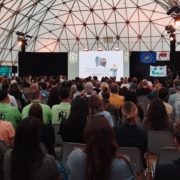
Exchanges with Andorra to improve bear conservation and coexistence with human activities

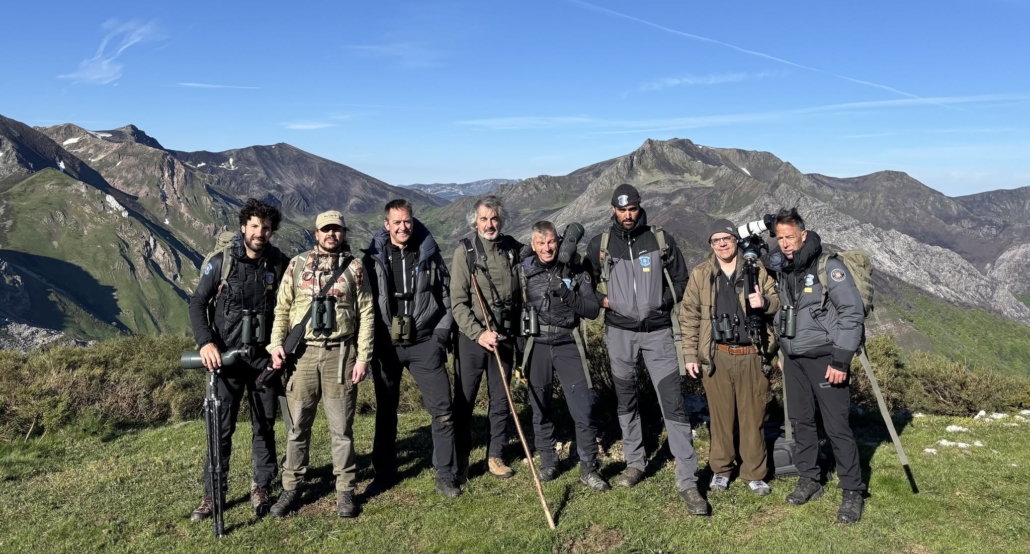
During the month of May, we had the pleasure of accompanying an institutional delegation from the Government of Andorra, led by the Minister of Environment, Agriculture and Livestock, Guillem Casal; the Director of the Department of Environment and Sustainability, Sílvia Ferrer; the Director of the Cos de Banders (Andorra’s environmental ranger corps), Ferran Teixidó; and the Wildlife Unit specialists Jordi Solà, Héctor del Val, and Josep Maria Sánchez.

The purpose of the visit, as Minister Guillem Casal himself explained, was to prepare for the stable return of the brown bear in Andorra, acknowledging that its conservation requires active planning and ensuring incident‑free coexistence between human activities and the presence of the bear. In this regard, Somiedo was seen as a particularly relevant example, both for the management of its territory and for the similarities it shares with Andorra.


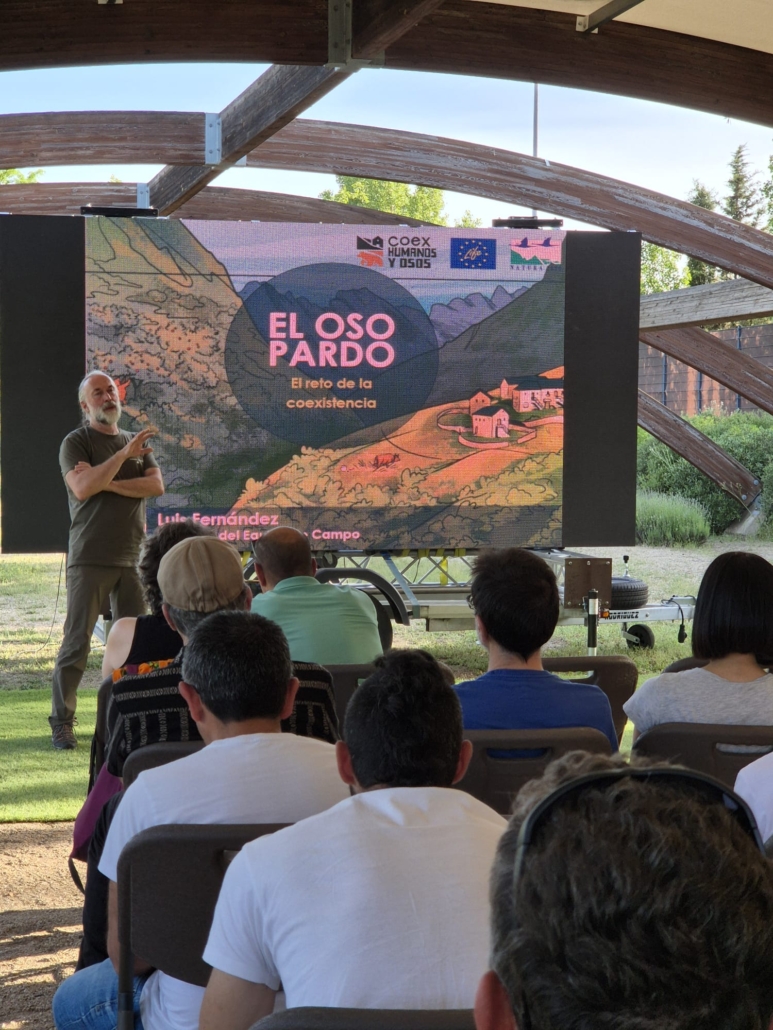
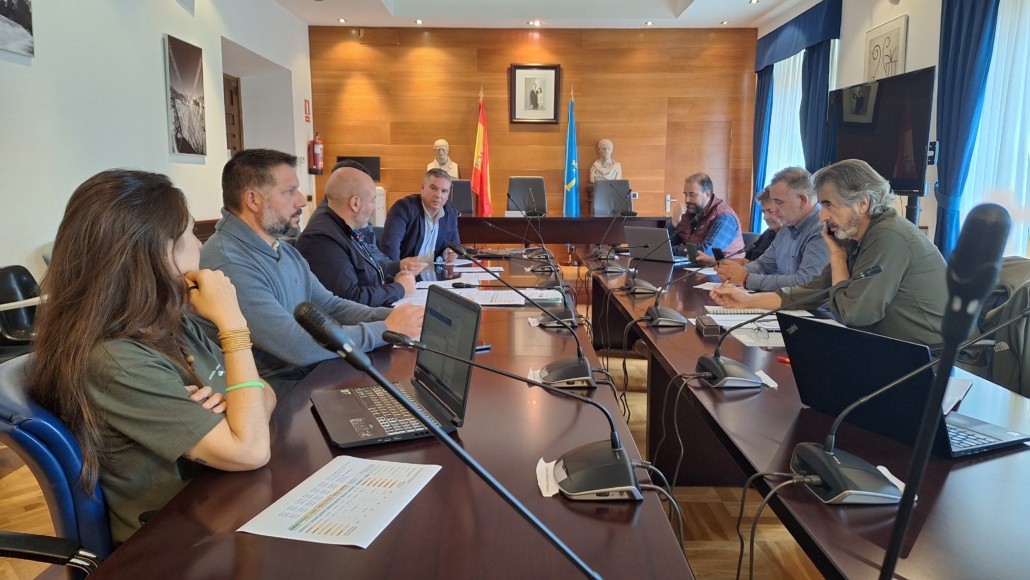
Throughout the visit, experiences and insights were exchanged with David Villar and Marcos Da Rocha (General Directors of Land Stewardship and Agricultural Planning of the Principality of Asturias, respectively), Belarmino Fernández (Mayor of Somiedo), Luis Fernando Alonso (Director of the Somiedo Natural Park), and—within the framework of the LIFE Human Bear COEX project—with Guillermo Palomero (President of the Brown Bear Foundation), as well as representatives from other key bear areas such as Mario Rivas (Mayor of Villablino, Castilla y León).

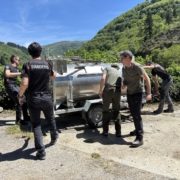
A few days earlier, we accompanied a team from the Cos de Banders, who exchanged information and experiences on bears and capercaillies with environmental technicians and agents from the Principality of Asturias and the Regional Government of Castilla y León, as well as with teams from the Brown Bear Foundation. These meetings are always highly valuable, helping to expand the knowledge of all participants, encouraging discussion on shared challenges and solutions, and strengthening cooperation among territories that face common biodiversity conservation issues.

We continue to champion the exchange of ideas, actions, and experiences in support of coexistence with bears in other European populations

María Párraga, Marina Gaona, and Alicia Madrid, members of the technical and field team of the LIFE Human Bear Coex project coordinated by the FOP, visited the Abruzzo, Lazio and Molise National Park in the Italian Apennines to learn first‑hand about the actions being carried out under the LIFE Bear‑Smart Corridors project, coordinated by Rewilding Europe and whose activities also extend to the Greek bear population. Their goal: to foster the recovery of these endangered populations through measures that support their expansion and coexistence with local communities. Ours: to prevent and mitigate conflicts in villages and surrounding areas in order to promote coexistence between humans and bears in the municipalities with the highest density of this species in the Cantabrian Mountains. Two projects advancing toward the same purpose in different European settings.

During the visit, the team had the opportunity to explore the project in depth and observe its actions on the ground. By meeting with local ranchers, farmers, and beekeepers, they gained first‑hand insight into social perceptions of bears in the region, the preventive measures being implemented to protect henhouses, herds, orchards, and hives, and how effective these measures are. Together with technicians and rangers from the National Park, they also exchanged valuable ideas and best practices on conflict management and the importance of developing strategies that encourage awareness and participation across all levels of society.

Opportunities like this make it possible to continue taking coordinated and effective steps toward peaceful coexistence with an emblematic species that is gradually reclaiming its future, even in the small communities of southern Europe.

Webinar on human-wildlife coexistence alongside LIFE Iberconejo project

Advancing from conflict towards an effective co-existence, which benefits both people and biodiversity, is one of the major challenges for nature conservation around the world. It is a challenge that spans endangered as well as more common species, the larger as well as the smaller fauna. With the aim of sharing ideas and solutions to advance in this field, the LIFE Iberconejo and LIFE Human Bear COEX projects organised a webinar on 27 May, which was attended by more than fifty people.

‘Bears in village environments: can we anticipate potential conflict?’ was the title of the talk by María Párraga, project coordinator of the Brown Bear Foundation (FOP), in which she analysed the recovery of the brown bear and the changes in the rural areas of the Cantabrian Mountains that are behind this phenomenon, and how FOP is working with local councils to ensure coexistence.

Alberto Navarro, LIFE Human Bear COEX project technician, explained the details of the Protocol for intervention with bears in the Cantabrian Mountains, approved in 2019 by the State Commission for Natural Heritage and Biodiversity, and the different situations that can lead the competent administrations to act.

The recording of the seminar is available here (in spanish):


The bear territory reaffirms its commitment to coexistence with the species at a meeting of mayors in Somiedo

We want bears, but away from the villages. This is the message reiterated today by the six municipalities with the highest density of bears in the region of Asturias, meeting with the Principado de Asturias and the Brown Bear Foundation (FOP) in the constitution of the Asturian Coordination Committee of the LIFE Human Bear COEX project. The initiative, of which nine town councils from Asturias and Castilla y León are partners, seeks to mitigate possible conflicts with the species and ensure that not a single bear in the Cantabrian Mountains becomes habituated to humans.

During the meeting of the project coordination committee in Asturias, the details of the action plan to prevent the presence of bears in the vicinity of the villages were agreed, which will be carried out by two prevention teams managed by the local councils themselves.

Among the tasks of the teams, made up of local workers, will be to maintain security perimeters in the villages and along roads by clearing vegetation; clearing illegal accumulations of rubbish that could attract bears; and planting fruit trees away from the villages. Throughout the project area, in Asturias and the northwest of León, 50,000 native fruit trees will be planted in 250 groves to generate more food resources for bears in the bush and discourage them from seeking easy food in human settlements.

Goal: no habituated bears in the Cantabrian mountains

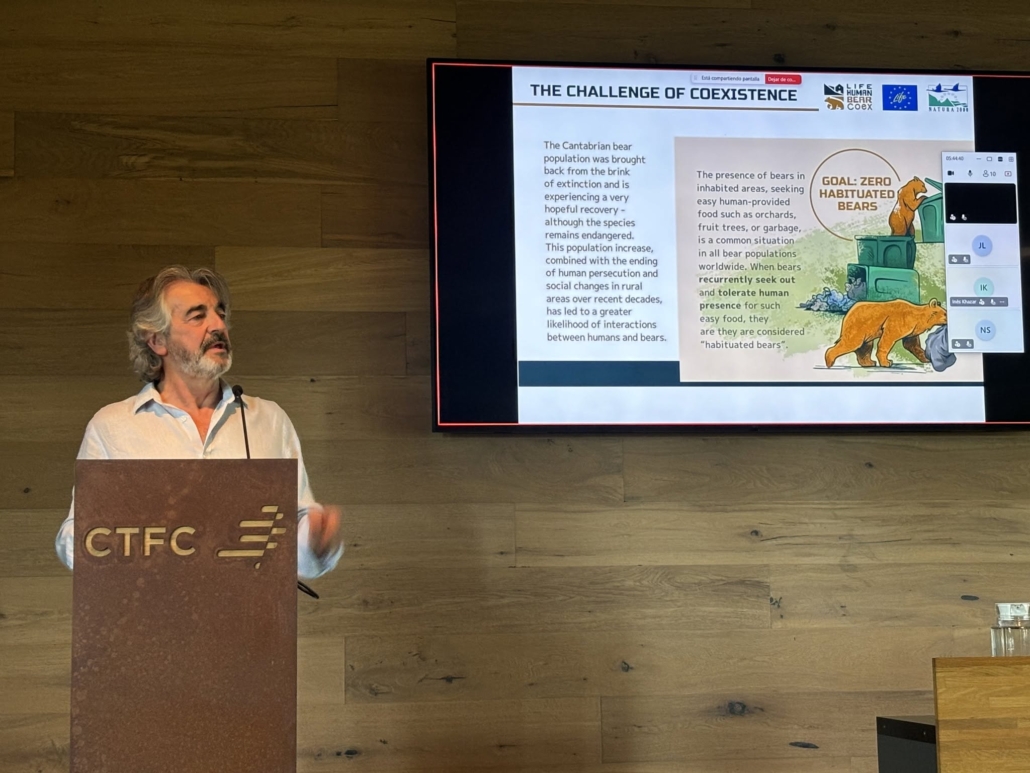
The goal of the project, coordinated by the FOP and funded by the European Union’s LIFE programme, is that there will not be a single bear habituated to people or human food sources, such as rubbish.

As defined in the Protocol for Intervention with Bears in the Cantabrian Mountains (approved in 2019 by the State Commission for Natural Heritage and Biodiversity), ‘a habituated bear is a bear that recurrently accesses inhabited areas in search of accessible trophic resources (food), such as vegetable gardens or rubbish containers, and does not respond by fleeing in the presence of humans’.

A young bear looks for garbage inside a bin in Asturias. Credit: FOP

Within the framework of the project, a specialised team from the FOP will respond immediately to problematic situations: for example, by protecting chicken coops, fruit trees or other assets that attract plantigrades. In this sense, the project complements and strengthens the actions being developed by the Principado’s Regional Ministry of Rural Affairs and Agricultural Policy to ensure coexistence with the species in Asturias. The capture and radio-tracking of 10 bears is foreseen, prioritising those specimens that look for easy food around human environments, and bear-proof containers and rubbish bins will also be installed.

Coordinated by the Brown Bear Foundation, the nine municipalities with the highest density of bears in Spain (Somiedo, Belmonte de Miranda, Proaza, Cangas del Narcea, Degaña and Ibias, in Asturias, and Villablino, Páramo del Sil and Palacios del Sil in León) are partners of LIFE Coexistence between Humans and Bears. The Junta de Castilla y León and the regional government of Asturias support it as partners, and the Fundación Patrimonio Natural de Castilla y León and the Fundación Oso de Asturias participate as collaborators.

The municipalities in the most critical brown bear areas in Spain will lead a LIFE project to promote coexistence, together with the Brown Bear Foundation and the regional Governments of Asturias and Castilla y Leon

Nine municipalities in the western Cantabrian mountains, which host the highest density of brown bears in Spain, will be the main actors in a new conservation Project supported by the European Union’s LIFE Programme. “LIFE Human Bear Coex”, coordinated by the Fundacion Oso Pardo (FOP – Brown Bear Foundation), aims to prevent the incursion of bears to villages and their surroundings, as well as to mitigate possible conflicts with the species in those areas with larger populations of the species.

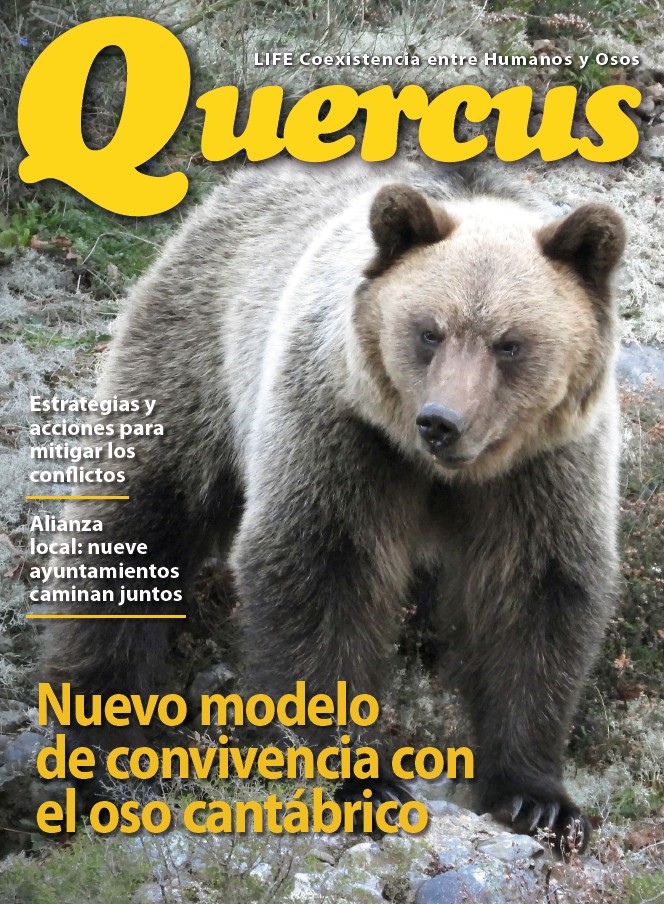
Although the Cantabrian brown bear is still endangered, the species is moving away from the brink of extinction, with around 370 individuals in 2020 according to data from the last census. This recovery, together with the bears’ capacity to adapt and the changes that have taken place in rural areas in recent decades, is associated with an increase in human-bear interactions.

“The recovery of the Cantabrian brown bear is a conservation success story, recognised beyond our borders, and one of its key drivers has been the constant dialogue and agreements with the local communities”, explains the president of the FOP, Guillermo Palomero. “With this LIFE project, the inhabitants of the territory get together to keep the bear away from the villages, a key challenge to ensure the future of the species”.

The involvement of the territory is at the heart of the project, as the 9 municipalities where it will be developed – Somiedo, Belmonte de Miranda, Proaza, Cangas del Narcea, Degaña and Ibias, in Asturias, and Villablino, Páramo del Sil and Palacios del Sil in León – act as Project Partners: an uncommon level of local involvement in a LIFE project.

The regional goverments of Castilla y León and Asturias support it as Project Associates. Over the years, they have been implement measures to favour the coexistence between bears and human activities – compensating damages, subsidising electric fencing and other deterrent equipment. Both governments have established field teams of specialised staff to apply the negative conditioning measures to bears with a tendency to habituate. The Fundación Patrimonio Natural de Castilla y León and the Fundación Oso de Asturias participate as collaborators, providing equipment and personnel for the information and awareness-raising actions.

The project, which will last four and a half years, has a total budget of 4,200,000 euros, with 75% of the funds provided by the European Union’s LIFE programme.
The project’s main actions fall into three key areas: prevention, management of human-bear interactions, and information, awareness and environmental education campaigns.

Creating Jobs and capacity for local workers

The prevention actions aim to keep bears away from villages. They will be carried out by three teams managed by the local councils themselves, two in Asturias and one in León, staffed by unemployed people from the local area. Besides creating rural jobs, the project will train these local workers and provide them with tools and vehicles. The mission of these local teams will be to maintain security perimeters in the villages and on paths by clearing bush vegetation to avoid interactions with bears, clearing around a hundred paths.

A brown bear eating wild cherries in the Cantabrian mountains. Picture by Fundacion Oso Pardo.

They will also remove illegal accumulations of rubbish or other attractants. These actions are expected to reach at least 120 villages, providing comfort to local residents.
These teams will also undertake the planting of 50,000 native fruit trees, distributed in 250 groves located far away from the villages. The aim is to generate food resources for bears in the Bush, that will discourage them from seeking easy food sources in human settlements.

Immediate response to human-bear interactions

The actions to manage conflicts with bears will be carried out by a FOP specialised team, which will resolve problematic situations by removing elements that attract bears on a recurring basis. Domestic animal facilities, chicken coops, fruit trees and other assets will be protected using 200 solar-powered fences, metal mesh and other prevention elements. Bear repelling techniques –including 90 electronic systems based on sound, ultrasound and light– will be tested experimentally. The project will closely monitor their effectiveness and usefulness in order to replicate the experience in the future.

The project will install 45 bear containers and 45 container-covering structures in collaboration with and complementing the initiatives of both Regional Governments, as well as exploring other innovative ways to prevent bears from accessing rubbish.

A young bear looking for garbage inside a container. Picture by Fundacion Oso Pardo.

Both in Castilla y León and Asturias, the administrations have been successfully developing bear collaring and radio-tracking programmes, prioritising those specimens with behaviours of habituation to easy food in population environments. In this sense, the LIFE project supports the programme in Asturias – the collaring and monitoring of 10 bears involved in recurrent approaches to villages, possible habituation or conditioning to food sources is planned throughout the whole Project.

Information, awareness-raising and environmental education campaigns

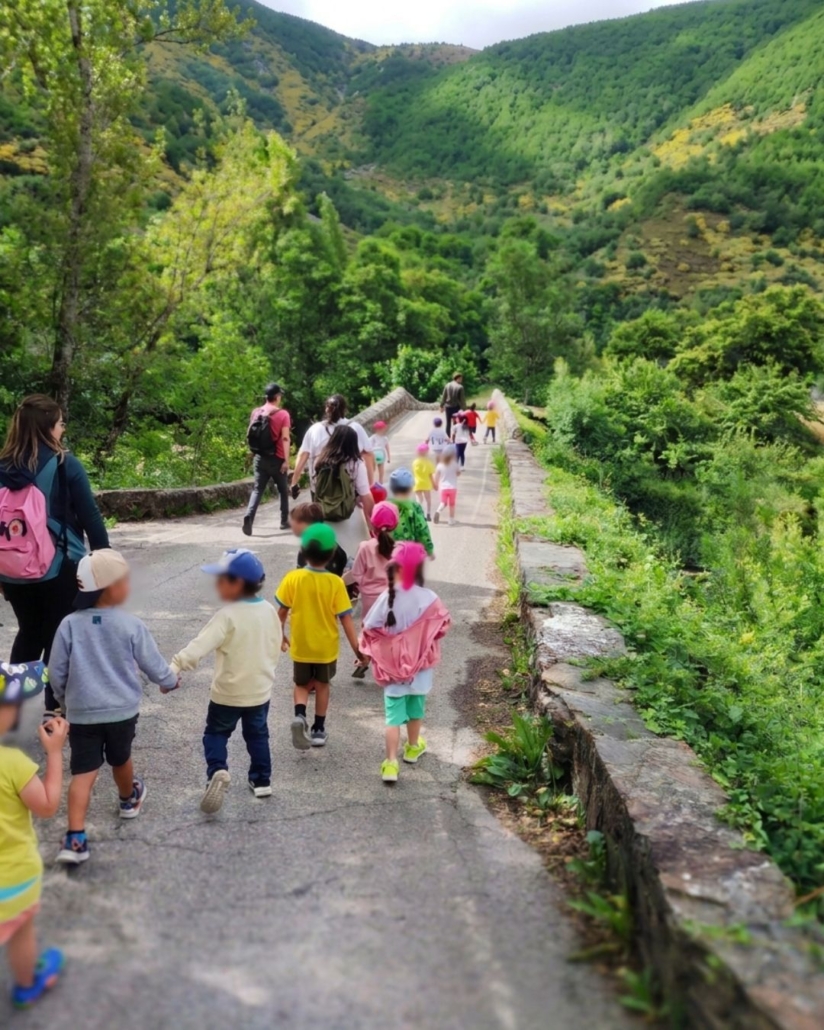
The campaign will include more than 160 talks and meetings with the residents of the 9 municipalities, to inform about the causes and consequences of the presence of bears in the villages, and to discuss how to prevent it. Information will be provided on good practices for garbage disposal and, meanwhile, an environmental education campaign will reach 2,300 schoolchildren in 27 rural schools.

A rural community in southwestern Asturias, sorrounded by prime brown bear habitat. Picture by Fundacion Oso Pardo. 

Furthermore, considering the importance of the project for the future conservation and management of the Cantabrian Brown Bear population, the project envisages the establishment of an advisory and management committee both autonomous communities, made up of representatives of all the participating administrations, experts and technicians.