The project’s first planting campaign commences in the Alto Sil in León. December 2022

The first campaign of trophic enrichment plantations for the brown bear was started on 12 December 2022 in the Alto Sil area of León, within the LIFE Osos con futuro project framework and which by the end will comprise the planting of 150 thousand fruit trees and 25 thousand sweet chestnut trees occupying a total of 200 hectares spread across different parts of Castilla y León and Asturias.

The plantations are being made in the public utility lands belonging to the Anllares del Sil local council, in the municipality of Páramo del Sil and of the public mountains of Palacios del Sil. Planting will also be undertaken in land belonging to the Anllarinos del Sil local council, other areas of Páramo del Sil, as well as in private estates of both municipalities. A land custody agreement guaranteeing the long-term presence of these plantations is signed with each landowner prior to work commencing. Planting will also be undertaken in those farmlands acquired with LIFE funds.

Selection of the areas for planting was first undertaken by the project via suitability studies based on plant species and land characteristics in relation to climate change.
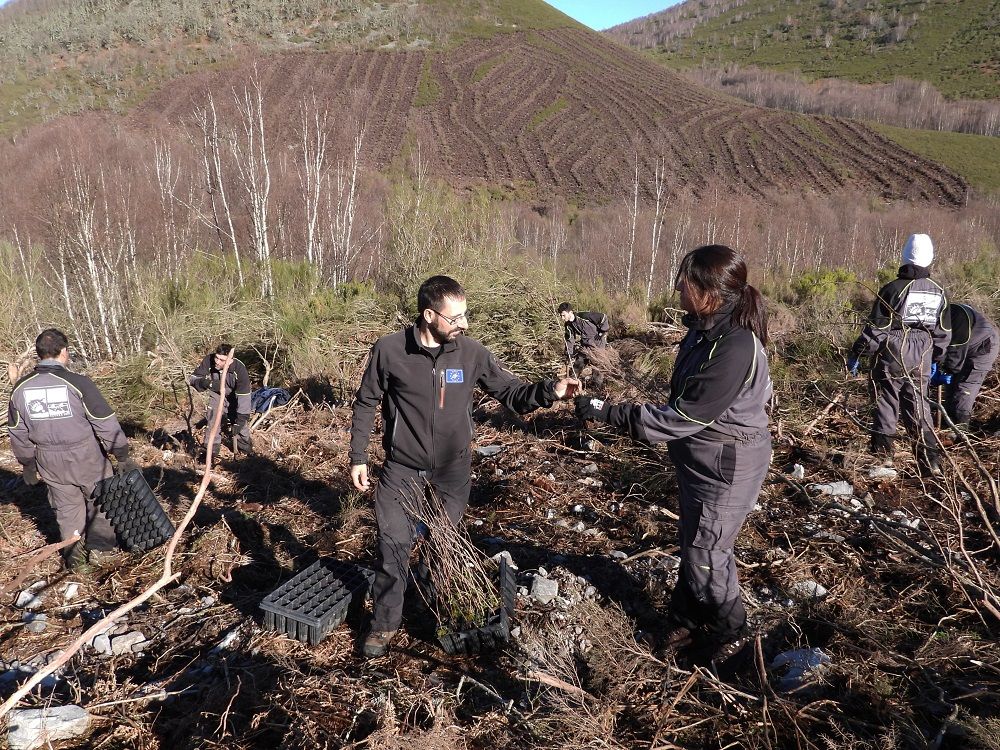
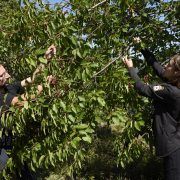
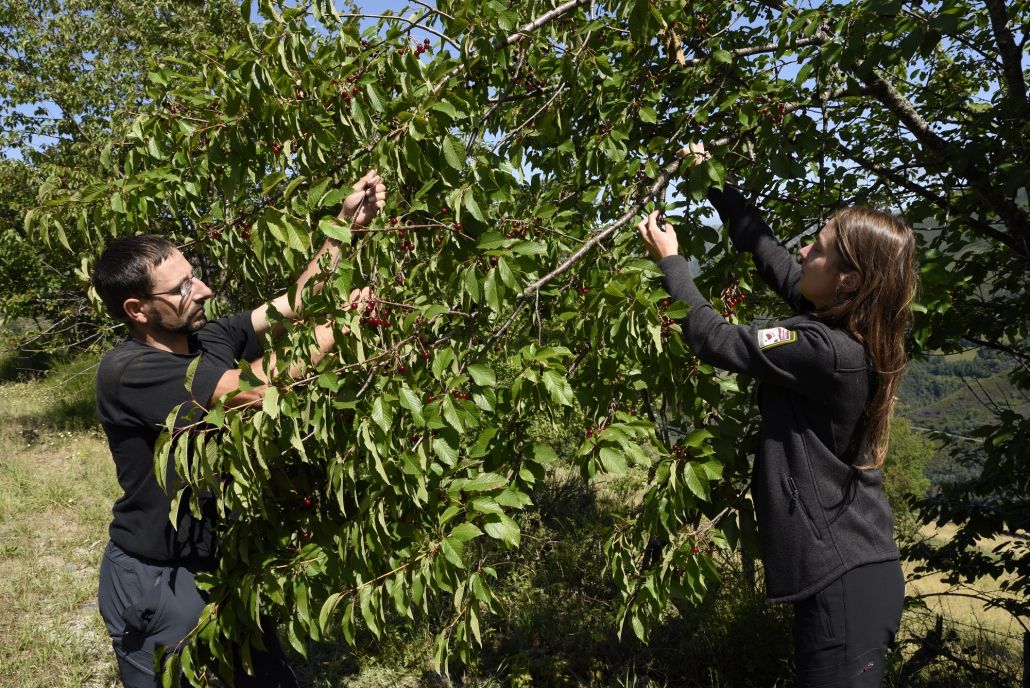
Fruit plantation in Páramo del Sil, with local workers hired under the LIFE project. In the center, Elías Suárez, from the FOP.

Local teams started preparing the ground in October 2022 for the hole digging and scrub clearance using a walking excavator, a machine which is able to reach difficult-to-access areas and work on steep slopes, but which produces a minimum impact on the terrain and the existing vegetation. This mechanised labour guarantees the clearance of large amounts of soil for each hole, greatly facilitating the rootstock development of the plants.

The tree and shrub species being planted, the fruits of which serve as food for the brown bear from the end of spring through to the start of winter, are cherry, apple, alder buckthorn, rowan and whitebeams, while chestnut planting will also start very shortly. Collection programs of native wild seeds for the nursery production of seedlings have been undertaken since the start of the project. Two forestry teams, each comprising three men and three women from the immediate area, have been contracted, contributing to local job creation. A total of close to 70,000 fruiting trees and shrubs are planned to be planted during this first plantation campaign, which will be completed between the end of March and start of April, depending on meteorological conditions.

A coordinated project

The “Bears with Future” Project, co-financed by the European Union LIFE Project, will be carried out until 2025. It is coordinated by the Brown Bear Foundation in partnership with the Biodiversity Foundation (Ministry for Ecological Transition and Demographic Challenge), and the Natural heritage Foundation of the Castilla y León regional government. The Government of Asturias is co-financer, via the Directorate General for the Environment and Rural Planning, of the Department of Rural Development, Agriculture and Fisheries. Tierra Pura Foundation collaborates technically and co-finances the project.
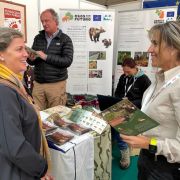
LIFE Bears with Future returns to the Naturcyl Fair. September 2022

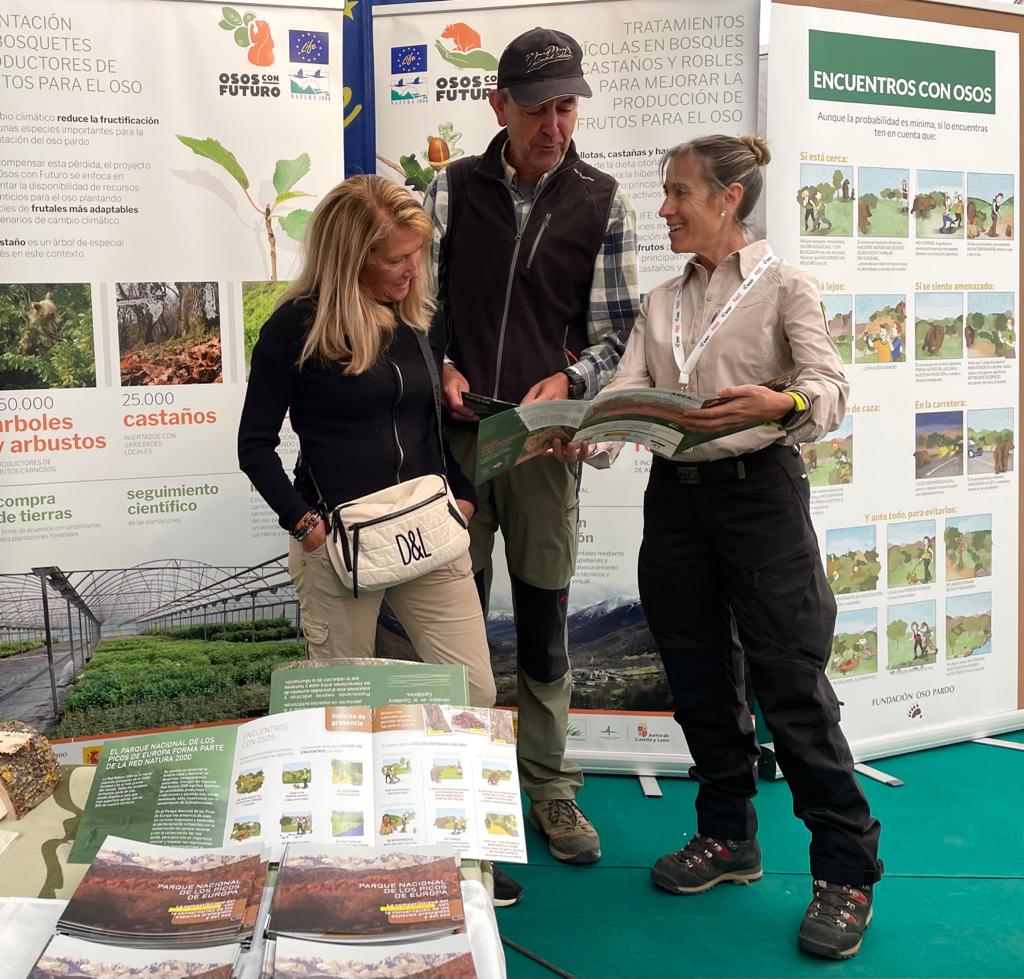
The actions of the LIFE Bears with Future project have aroused great interest among visitors to the Castilla y León Ecotourism Fair, Naturcyl, which this year has held its fifth edition between September 23rd and 25th at its usual venue, the town Ruesga, in the Palencia Mountains.

This is an area of ​​special interest for LIFE Bears with Future, as it is home to a large part of the bear population of the eastern Cantabrian Mountains and is a growing focus of attraction for hikers and other users of leisure activities in the mountains. For this reason, information has been offered on the recommendations for touring these mountains, emphasizing that they are also applicable in winter, due to the impact of climate change on the progressive reduction of bear hibernation.

Begoña Almeida, member of the Eastern Cantabrian Bear Patrol, offers information to visitors to the Naturcyl Fair at the stand of the Fundación Oso Pardo

The stand of the Oso Pardo Foundation has also offered information on the forestry work and plantations that are carried out in the LIFE project in climate change scenarios:

  • Plantation of fruit trees to increase trophic availability for bears
  • Plantation of native chestnut varieties to increase trophic availability for bears
  • Restoration and treatment of chestnut forests to increase fruit production and climate resilience.

A coordinated project

The “Bears with Future” Project, co-financed by the European Union LIFE Project, will be carried out until 2025. It is coordinated by the Brown Bear Foundation in partnership with the Biodiversity Foundation (Ministry for Ecological Transition and Demographic Challenge), and the Natural heritage Foundation of the Castilla y León regional government. The Government of Asturias is co-financer, via the Directorate General for the Environment and Rural Planning, of the Department of Rural Development, Agriculture and Fisheries. Tierra Pura Foundation collaborates technically and co-finances the project.
Permanent exhibition on LIFE Bears with Future in Valporquero, León. August 2022

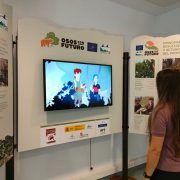
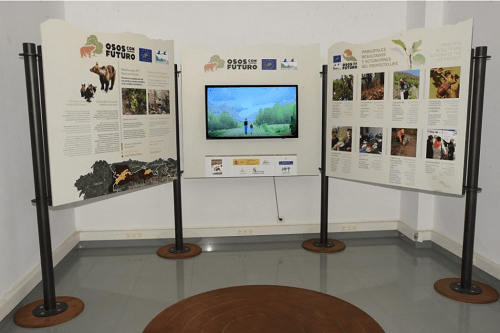
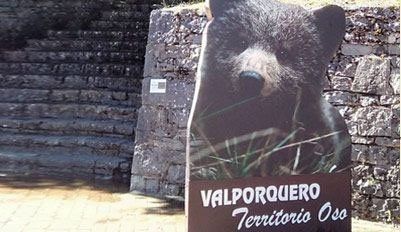
Starting this summer, the informative exhibition “Los osos de Arbolio” that the Fundación Oso Pardo (FOP) maintains permanently next to the Valporquero Cave, in León, incorporates three information panels on the LIFE Bears with Future project.The panels explain, with the support of visual elements, how climate change impacts the lives of Cantabrian bears, and what actions the LIFE project is developing to help the species adapt to this new scenario. The central panel houses a monitor on which the animated video «Advices for visiting the mountains of the brown bear» is projected, produced as part of the project, executed by The Glow Animation Studio, from the Glow production company.

Paneles del proyecto LIFE OSos con Futuro en las instalaciones asociadas a la Cueva de Valporquero

The exhibition is free of charge and is located in the adjacent facilities associated with the Valporquero Cave.

A coordinated project

The “Bears with Future” Project, co-financed by the European Union LIFE Project, will be carried out until 2025. It is coordinated by the Brown Bear Foundation in partnership with the Biodiversity Foundation (Ministry for Ecological Transition and Demographic Challenge), and the Natural heritage Foundation of the Castilla y León regional government. The Government of Asturias is co-financer, via the Directorate General for the Environment and Rural Planning, of the Department of Rural Development, Agriculture and Fisheries. Tierra Pura Foundation collaborates technically and co-finances the project.
Second cherry seed collection campaign. July 2022.

In the month of July 2022, the different Official Seed Sources declared for the collection of cherry (Prunus avium) seeds in León and Asturias were visited to assess the quantity and condition of the fruit produced this season. Unlike the previous year 2021, in which 140 kg of cherries were collected from different Seed Sources in the province of León, this year 2022 has seen low fruit production in many areas of León, linked to late spring frosts that damaged flowering, and yet the existence of a good harvest has been confirmed in some areas of south western Asturias.

For this reason, on July 5 and 6, 2022, the LIFE field team, with the collaboration of the bear patrols of the Fundación Oso Pardo in Asturias, collected 52kg of cherry fruits from trees in the Official Seed Source FS/95/04/33/003, in Taladrid, in the Asturian municipality of Ibias, and on July 13 another 26 kg of cherry fruits were collected in the Official Seed Source FS/95/04/33/001 in San Martín de Eiros, in the Asturian municipality of Cangas del Narcea. The works have been carried out under the supervision of the Seed Sources responsible of the Principado de Asturias (SERPA Services Society) and with the corresponding authorization from the Forestry Service.

The fruits have been transferred to the Central Forest Nursery of the Junta de Castilla y León, where the seeds will be cleaned and prepared for plant production. The cherry tree is a regulated species, so only specimens from seeds collected in forest stands declared as Seed Sources can be planted and all the seed collected must be certified by the corresponding administration, to guarantee the suitability of the origin and the traceability of the plant production process. At a later date, attempts will be made to complete the collection and at the end of summer other seeds of interest will be collected, such as buckthorn (Frangula alnus) or whitebeam (Sorbus aria).

In addition, this summer samples of ripe cherries are being collected from different trees located in bear areas and that have been visited by the bear in this or previous seasons for a nutritional content study that will be carried out in collaboration with the Food Technology Department of the University of Vigo.

The advice for visiting the mountains of the brown bear, in a cartoon video. June 2022

The project LIFE Bears with Future launches a new cartoon video presenting usefull advice to visit bear mountains that can be helpfull to improve safety of both bears and visitors. It is part of the information campaign of the project, which develops different conservation actions for the Cantabrian bear under the current and foreseen climate change scenarios.

The aim of the video is to contribute to the compatibility between recreational activities in natural areas and the presence of bears in a context such as the current one, in which both these activities and the bear population are increasing. The LIFE project highlights the importance of expanding information actions also during the winter. The rise in winter temperatures in the mountains due to climate change will predictably affect bear hibernation, shortening it or even making bears not to hibernate at all, wich means there will be more active bears in the mountains.

The video also addresses the recommendations on how to act when encountering a bear, even if a bluff charge or a very exceptional attack occurs. It should be stressed that in Europe bears avoid contact with people, and they usually detect us well in advance, discreetly moving away from the place without the person realizing it in most cases. However, in case of a fortuitous encounter, one should never react aggressively or shout, or try to approach the bear because this actions could be identify as a threat.

The cartoon format of the story and its style aimed at all audiences seek to disseminate the messages. As the recommendations are similar in most of the European bear populations, an English translation of the video has been made to facilitate its use in other areas and agreements are being established to make versions in other languages. The animation video has been carried out by The Glow Animation Studio, recognized, among other awards, with the European Film Award and a Goya from the Academy of Cinematographic Arts and Sciences of Spain. The original idea and the script have been conceived by the FOP.

Technical networking and exchange visit with the LIFE Lynxconnect project. May 2022

As part of the networking actions and exchange of experiences between LIFE projects, in May 2022 two teams of technicians and managers of the Andalusian Government in the LIFE Lynxconnect project have made two visits to the Cantabrian Mountains to learn about the experiences carried out in the framework of the LIFE “Bears with Future” project and different aspects of the management and conservation of the brown bear.

The visits of the LIFE Lynxconnect teams took place from May 3 to 6 and 16 to 19, visiting different work areas in Laciana (León) and the natural parks of Somiedo and Fuentes del Narcea, Degaña and Ibias (Asturias) accompanied by Fundación Oso Pardo technicians and field patrols. In addition to field trips and sharing experiences on the ground, several debate meetings and project presentations have been held in collaboration with the Fundación Patrimonio Natural de Castilla y León (May 6 at the Casa del Parque de Babia y Luna in Riolago and May 17 at the Capercaillie Center in Caboalles de Arriba) and exchange of ideas on carnivore damage management in collaboration with the General Directorate of the Natural Environment and Rural Planning of the Principado de Asturias (May 4 and May 19, at the Visitors Centre of the Somiedo Natural Park). Environmental and technical agents from the Principado de Asturias and the Fundación Patrimonio Natural de Castilla y León, researchers from the Joint Institute for Biodiversity Research (CSIC-Oviedo University-Principado de Asturias) and the Fundación Cesefor and visiting agents from the Cos de Banders corps of the Government of Andorra. In addition to the LIFE Lynxconnect and LIFE Bears with Future projects, aspects of interest from the LIFE Safe Crossing, LIFE SoriaForestAdapt and H2020 Superb projects have been presented and discussed.

The visits have made it possible to exchange ideas and practices related to the conservation of these species and their habitats, conflict management and the resolution of the new challenges generated by the recovery of the Iberian lynx and brown bear populations.

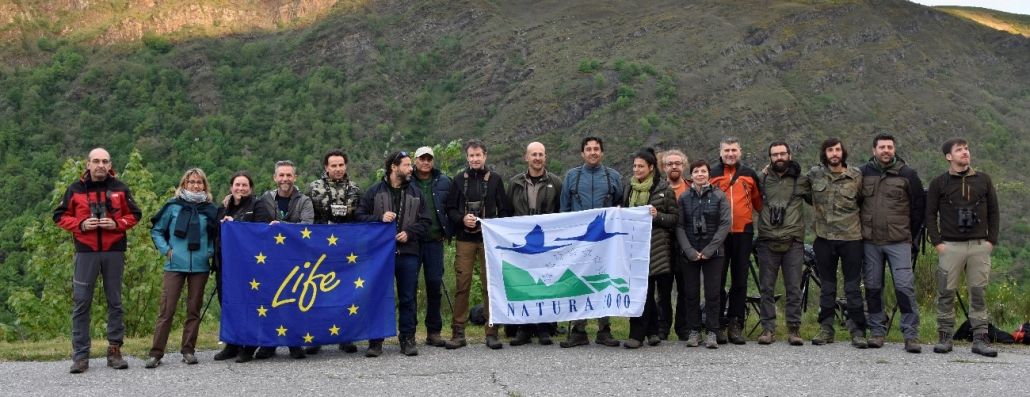
Teams of the LIFE Bears with Future project beneficiaries and technicians from the Andalusian Government in the LIFE Lynxconnect project in a field day in the Cantabrian Mountains.19

First visit of the external monitoring team to the LIFE Bears with Future. May 2022

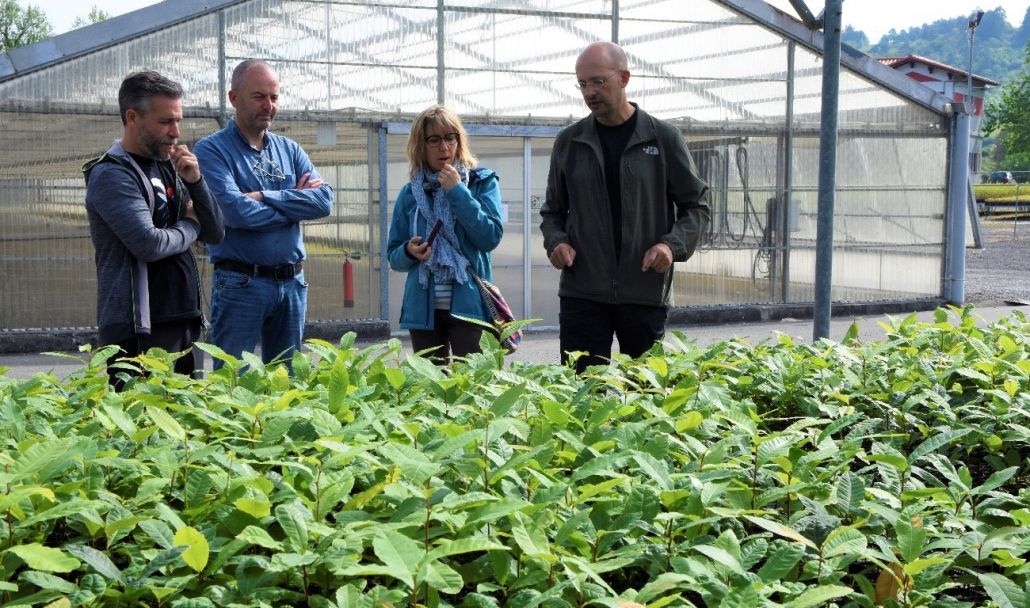
On May 16 and 17, 2022, the first visit to the project was carried out by the representative of the external monitoring team (NEEMO) of the LIFE projects, with the participation of the project teams of the Fundación Oso Pardo, the Fundación Patrimonio Natural de Castilla y León and the Fundación Biodiversidad. Some of the main actions carried out to date have been reviewed, visiting the production of chestnut seedlings in the La Mata forest nursery, dependent on the Principado de Asturias, the chestnut grafting treatment area in the Fuentes del Narcea, Degaña and Ibias Natural Park (Asturias) and several areas planned for the planting of chestnut and fleshy fruits forests in the municipality of Páramo del Sil (León). The visit has been completed with online meetings for the presentation of technical and financial information on the progress of the project.

Visita con el equipo de seguimiento al vivero forestal de La Mata, donde se están Visit with the external monitoring team to the La Mata forest nursery where chastnut seedlings are been produced for the project.
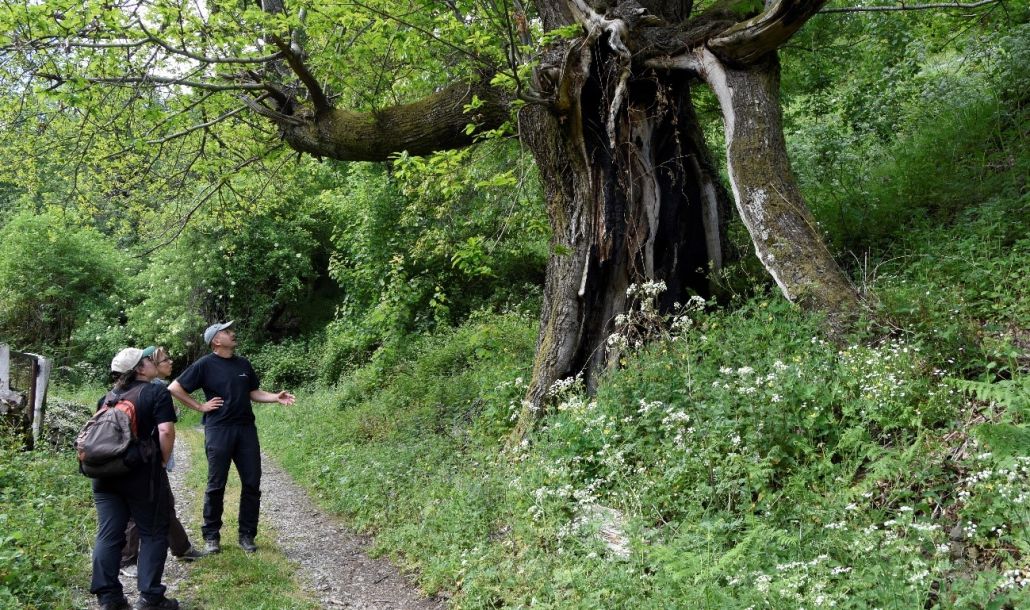
Visit with the external monitoring team to one of the old chestnut trees that has been genetically verified as a source of plant material for grafting.

Technical conferences on project advances and exchange of LIFE experiences. May 2022

Taking advantage of the visits by technical teams from the LIFE Lynxconnect project and other contacts established with other projects, in May 2022 two technical conferences were held to exchange experiences, which were also used to update the progress made in the LIFE Bears with Future project by the different beneficiary partners.

On May 6, a conference was held at the Babia-Luna Natural Park House in Riolago (León). Fernando Ballesteros and Luis Fernández, from the Fundación Oso Pardo, presented the strategic vision and progress of the LIFE Bears with Future project. Eduardo Álvarez, from the Fundación Patrimonio Natural de Castilla y León, presented the actions of the Foundation in the project. Rocío Gallego, from the CESEFOR Foundation, explained the LIFE Soria ForestAdapt project and the H2020 SUPERB project “Systemic solutions for the expansion of the urgent restoration of ecosystems for biodiversity and ecosystem services related to forests”. And Marcos López, from the Environment Agency of the Junta de Andalucía, presented the objectives and actions of the projects LIFE Lynxconnect “Creating a genetically and demographically functional metapopulation of the Iberian lynx (Lynx pardinus)” and LIFE SAFE CROSSING “A new international project for preventing large carnivore road mortality in Europe”.

On May 17, a second technical conference was held at the Capercaillie Centre in Caboalles de Arriba (León). Fernando Ballesteros, from the Fundación Oso pardo, presented the LIFE Bears with Future project and the proposals for the bear’s adaptation to climate change. Víctor Gutiérrez and Carmen Berrio, from the Fundación Biodiversidad, explained the communication and awareness strategies that are included in the project. Eduardo Álvarez and Víctor González, from the Fundación Patrimonio Natural de Castilla y León, outlined the actions of the Foundation in the project, and in particular the proposal for pilot interventions in forest formations. And Javier Salcedo, from the Junta de Andalucía and coordinator of the LIFE Lynxconnect project, presented the progress of this project. The day ended with a visit to one of the pilot forestry intervention areas in Caboalles de Arriba and to an area where chestnut and fleshy fruit forest will be planted in Anllares de Sil (León).

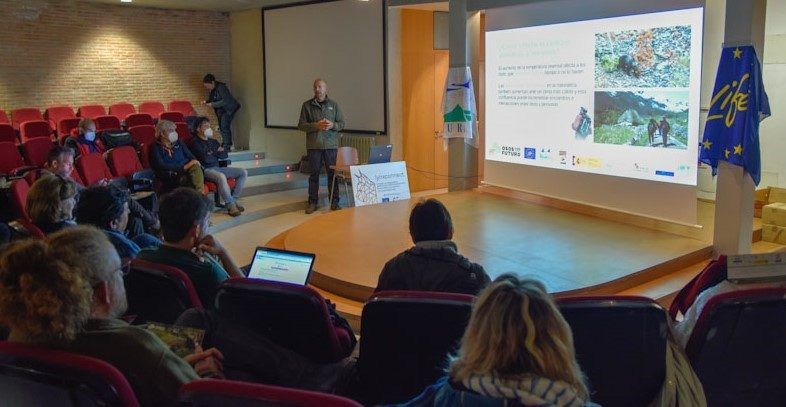
JoTechnical conference for the exchange of experiences held at the Capercaillie Centre in Caboalles de Arriba (León) on May 17 2022.

First chestnut grafting treatment. May 2022

In April and early May 2022, the field team of the LIFE “Bears with Future” project carried out the first forest treatment in chestnut forests corresponding to action C3 of the project.

This first action has been carried out on a forest plot owned by the Fundación Oso Pardo in an area with a high presence of bears and close to critical areas for the species in Cangas del Narcea (Asturias), which was planted with chestnut trees more than 20 years ago and has not received any further treatment. A previous scientific supervision has been carried out by the University of Oviedo advisory team, including a visit by the project’s Scientific Committee and a technical planning and the marking of the trees to intervene.

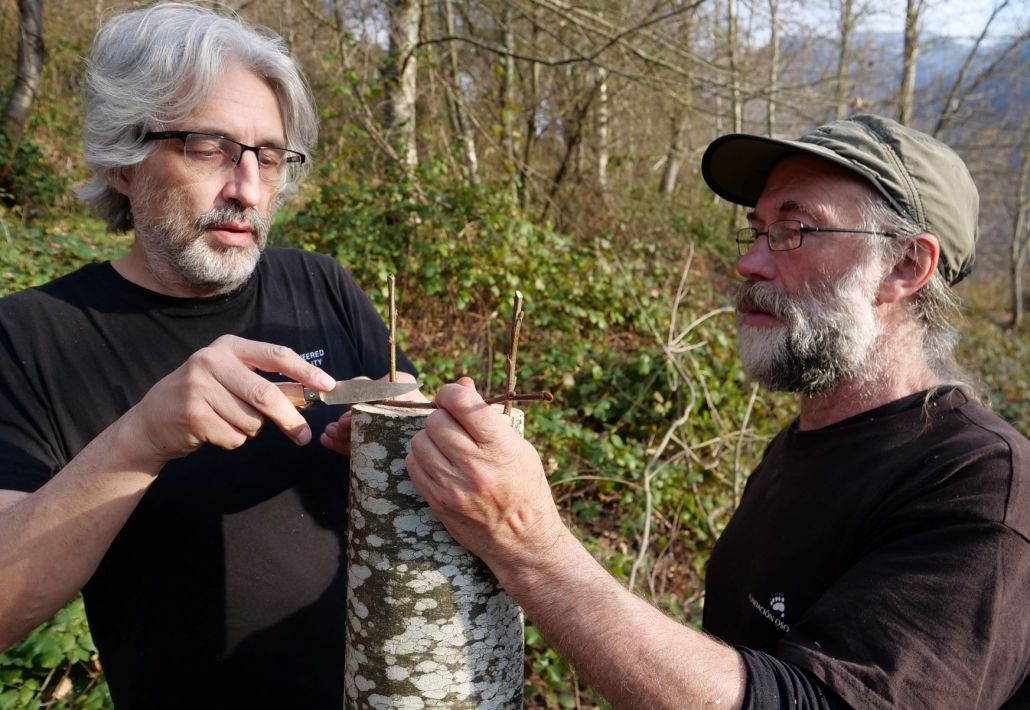
The elimination of competing trees has been limited exclusively to those that affected the growth and fruiting of the chestnut trees to be grafted, respecting in any case all the trees that produce fleshy fruits and nuts such as cherry trees, rowans, oaks or hazelnuts. The chestnut trees with the greatest potential for performing crown grafts have been selected, sawing the trunk horizontally at a height of 1.5 m and inserting 3 or 4 spikes with 2-3 buds each. Vegetative material has been collected from nearby ancient chestnut trees belonging to the “Parede” variety identified by genetic analysis. An important part of the chestnut trees has been kept ungrafted to favour pollination.

During the development of the treatment, a punctual presence of lesions compatible with canker disease (Cryphonectria parasitica) was detected in a few trees and in general without affecting their viability. All the work has been carried out applying strict precautionary measures against phytosanitary risks, basically consisting of the disinfection of all the tools by spraying bleach diluted 50% in water, sealing all the cuts made with suitable mastic and removing the main wood remains outside the plot.

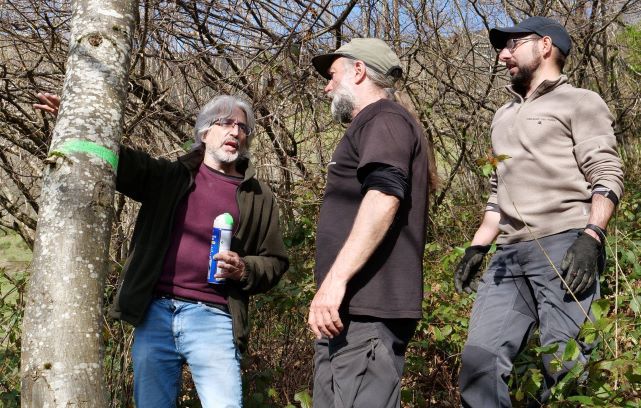
Marking of the trees selected for grafting.
Pedro Álvarez, from Oviedo University, and Luis Fernández, from Fundación Oso Pardo, performing a crown graft on a chestnut tree.