The bear territory reaffirms its commitment to coexistence with the species at a meeting of mayors in Somiedo
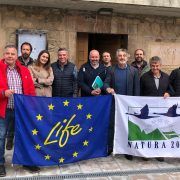
We want bears, but away from the villages. This is the message reiterated today by the six municipalities with the highest density of bears in the region of Asturias, meeting with the Principado de Asturias and the Brown Bear Foundation (FOP) in the constitution of the Asturian Coordination Committee of the LIFE Human Bear COEX project. The initiative, of which nine town councils from Asturias and Castilla y León are partners, seeks to mitigate possible conflicts with the species and ensure that not a single bear in the Cantabrian Mountains becomes habituated to humans.
During the meeting of the project coordination committee in Asturias, the details of the action plan to prevent the presence of bears in the vicinity of the villages were agreed, which will be carried out by two prevention teams managed by the local councils themselves.
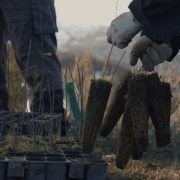
Among the tasks of the teams, made up of local workers, will be to maintain security perimeters in the villages and along roads by clearing vegetation; clearing illegal accumulations of rubbish that could attract bears; and planting fruit trees away from the villages. Throughout the project area, in Asturias and the northwest of León, 50,000 native fruit trees will be planted in 250 groves to generate more food resources for bears in the bush and discourage them from seeking easy food in human settlements.
Goal: no habituated bears in the Cantabrian mountains
The goal of the project, coordinated by the FOP and funded by the European Union’s LIFE programme, is that there will not be a single bear habituated to people or human food sources, such as rubbish.
As defined in the Protocol for Intervention with Bears in the Cantabrian Mountains (approved in 2019 by the State Commission for Natural Heritage and Biodiversity), ‘a habituated bear is a bear that recurrently accesses inhabited areas in search of accessible trophic resources (food), such as vegetable gardens or rubbish containers, and does not respond by fleeing in the presence of humans’.
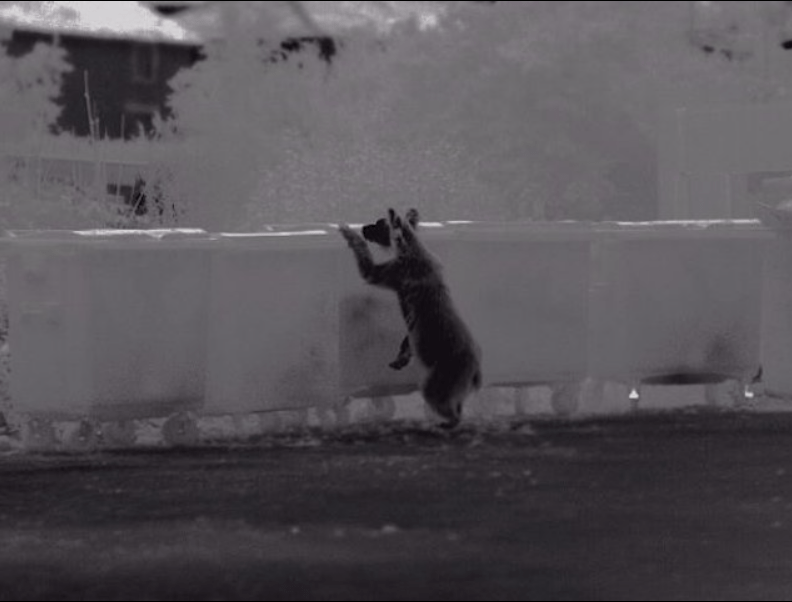
A young bear looks for garbage inside a bin in Asturias. Credit: FOP
Within the framework of the project, a specialised team from the FOP will respond immediately to problematic situations: for example, by protecting chicken coops, fruit trees or other assets that attract plantigrades. In this sense, the project complements and strengthens the actions being developed by the Principado’s Regional Ministry of Rural Affairs and Agricultural Policy to ensure coexistence with the species in Asturias. The capture and radio-tracking of 10 bears is foreseen, prioritising those specimens that look for easy food around human environments, and bear-proof containers and rubbish bins will also be installed.
Coordinated by the Brown Bear Foundation, the nine municipalities with the highest density of bears in Spain (Somiedo, Belmonte de Miranda, Proaza, Cangas del Narcea, Degaña and Ibias, in Asturias, and Villablino, Páramo del Sil and Palacios del Sil in León) are partners of LIFE Coexistence between Humans and Bears. The Junta de Castilla y León and the regional government of Asturias support it as partners, and the Fundación Patrimonio Natural de Castilla y León and the Fundación Oso de Asturias participate as collaborators.