• Twitter
  • Facebook
  • Instagram
  • Youtube
  • English English English en
  • Español Español Spanish es
ESPAÑOL
Fundación Oso Pardo
  • Home
  • WHO WE ARE
    • Management body
    • Our team
    • Our objectives
    • Results that leave a footprint
    • Legal regime
    • We are transparent
  • LEARNING ABOUT THE BROWN BEAR
    • The number of bears and where they live
    • Brown bear details
    • Not all brown bears are brown!
    • Tracks and signs
    • Bear landscapes
    • The repentant carnivore
    • Reproduction and family life
    • Hibernation
    • Bears and climate change
    • Encounters with bears
  • PROJECTS
    • LIFE Projects
      • Proyecto LIFE Human Bear Coex
      • Project LIFE bears with future
      • Other LIFE Projects
    • URSUS Program
    • HABITAT Program
    • Bear houses
    • FOOTPRINT Program
    • Bioeconomy: Chestnuts, Bears, and Rural Development
  • COLLABORATE WITH US
    • Donations and legacies
    • Become “Bears friend”
  • Publications
  • Supports
  • Search
  • Menu Menu

LIFE Bears with future

Agreement for the preparation of chestnut plants grafted with local varieties in La Mata Forest Nursery (Principado de Asturias). June 2021

30 June, 2021

Agreement for the preparation of chestnut plants grafted with local varieties in La Mata Forest Nursery (Principado de Asturias). June 2021

30 June, 2021/in LIFE Bears with future /by FOP

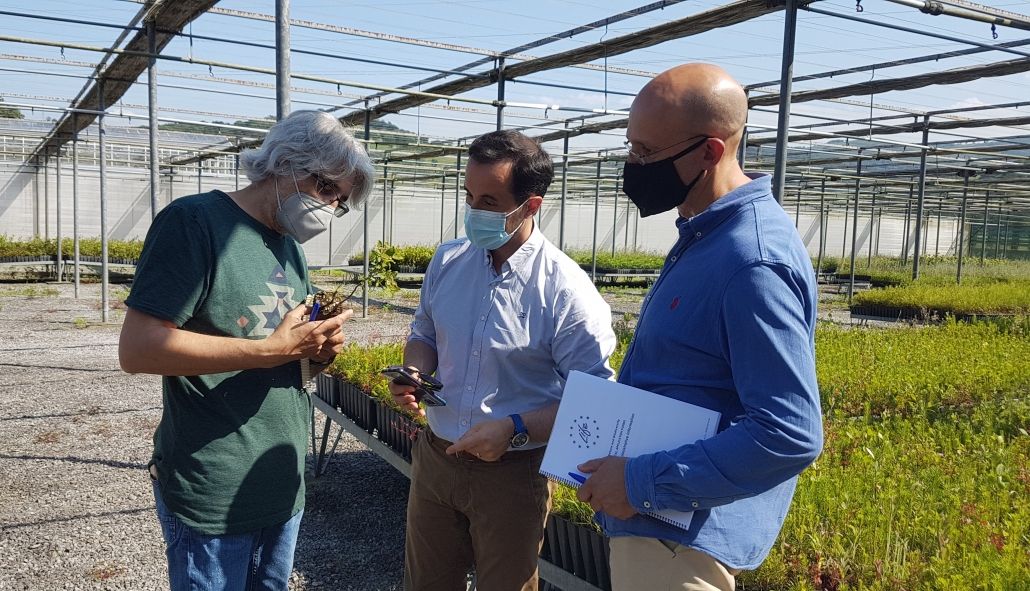
After several meetings and preparatory work, on June 15, 2021 a working meeting was held at La Mata Forest Nursery (Grado, Asturias) for the organization and preparation of the chestnut plant production campaign for the project ‘LIFE Bears with Future’. David Villar, General Director of Natural Environment and Rural Planning of the Principado de Asturias, Eloy Ron, of the Society of Services of the Principado de Asturias and technical manager of the forest nursery, Pedro Álvarez, professor at the University of Oviedo, Fernando Ballesteros, project coordinator and member of the Brown Bear Foundation and Belén Garzón, Tragsatec technician, participated in the meeting.

The project ‘LIFE Bears with Future’ will plant 25,000 chestnut trees, of which about 20,000 will be chestnut trees grafted with local varieties from each area and the rest wild chestnut trees without grafting. As a very relevant contribution to the project, the Principado deAsturias government will produce 15,000 chestnut trees grafted with local varieties in La Mata Forest Nursery, without cost associated with the project.

The working meeting has allowed to establish the bases and define needs and roles in the production of chestnut trees, which will begin with the collection of seeds in official authorized Seed Sources in autumn 2021 by the technical team of the forest nursery. The LIFE project will provide technical support for grafting work, which can be done in the nursery and/or in the field once the planting is done, with the most appropriate techniques in each case. The project will also inventory and locate old chestnut trees grafted with different local varieties of interest, which can provide suitable plant material for grafting, considering aspects such as resistance to diseases, vulnerability to climate change or productivity and phenology of fruiting.


From left to right: Pedro Álvarez (University of Oviedo), David Villar, (General Director of Natural Resources and Rural Planning of the Principado de Asturias) and Fernando Ballesteros (Brown Bear Foundation), reviewing characteristics of seedling production in the Forest Nursery La Mata (Grado, Asturias).

Share this entry
  • Share on Facebook
  • Share on Twitter
  • Share on Pinterest
  • Share on LinkedIn
  • Share on Tumblr
  • Share on Vk
  • Share on Reddit
  • Share by Mail
https://m.fundacionosopardo.org/wp-content/uploads/2021/11/reunion-vivero.jpg 2137 3725 FOP https://m.fundacionosopardo.org/wp-content/uploads/2019/01/Fundacion_Oso_Logo_1.png FOP2021-06-30 10:22:452022-04-20 15:14:33Agreement for the preparation of chestnut plants grafted with local varieties in La Mata Forest Nursery (Principado de Asturias). June 2021

Pages

  • BEAR HOUSES
  • Become “Bears friend”
  • Bioeconomy: Chestnuts, Bears, and Rural Development
  • COEX
  • Cookies policy
  • Donations and legacies
  • FOOTPRINT Program
  • Form: become bears friend
  • HABITAT Program
  • Home
  • Legal Notice
  • LIFE Projects
  • Management body
  • Marco legal
  • Other LIFE Projects
  • Our objectives
  • Our team
  • Privacy Policy
  • Project LIFE bears with future
  • Proyecto LIFE Human Bear Coex
  • Publications
  • Results that leave a footprint
  • Supports
  • Under review
  • URSUS Program
  • URSUS Program
  • We are transparent

Categories

  • Actualidad
  • LIFE Bears with future
  • LIFE Human Bear Coex
  • Private fundations
  • Public administrations and other public entities
  • Socially Responsible Companies
  • Uncategorized

Archive

  • June 2026
  • June 2025
  • June 2024
  • April 2024
  • March 2024
  • December 2023
  • October 2023
  • September 2023
  • July 2023
  • May 2023
  • April 2023
  • February 2023
  • December 2022
  • October 2022
  • September 2022
  • August 2022
  • July 2022
  • June 2022
  • May 2022
  • March 2022
  • February 2022
  • December 2021
  • November 2021
  • October 2021
  • September 2021
  • August 2021
  • June 2021
  • March 2021

FUNDACIÓN OSO PARDO

c/ San Luis 17 4ºA.
39010 Santander – Cantabria
(España)

Tel: +34 942 23 49 00
Fax: +34 942 23 50 48
fop@fundacionosopardo.org

© 2024 FUNDACIÓN OSO PARDO

PRIVACY POLICY
COOKIES POLICY
LEGAL NOTICE

Presentation of the “Bears with Future” LIFE Project. March 2021First cherry seed campaign collection. June 2021

Scroll to top

We are using cookies to give you the best experience on our website.

You can find out more about which cookies we are using or switch them off in settings.

Powered by  GDPR Cookie Compliance
Privacy Overview

This website uses cookies so that we can provide you with the best user experience possible. Cookie information is stored in your browser and performs functions such as recognising you when you return to our website and helping our team to understand which sections of the website you find most interesting and useful.

Strictly Necessary Cookies

Strictly Necessary Cookie should be enabled at all times so that we can save your preferences for cookie settings.

If you disable this cookie, we will not be able to save your preferences. This means that every time you visit this website you will need to enable or disable cookies again.