• Twitter
  • Facebook
  • Instagram
  • Youtube
  • English English English en
  • Español Español Spanish es
ESPAÑOL
Fundación Oso Pardo
  • Home
  • WHO WE ARE
    • Management body
    • Our team
    • Our objectives
    • Results that leave a footprint
    • Legal regime
    • We are transparent
  • LEARNING ABOUT THE BROWN BEAR
    • The number of bears and where they live
    • Brown bear details
    • Not all brown bears are brown!
    • Tracks and signs
    • Bear landscapes
    • The repentant carnivore
    • Reproduction and family life
    • Hibernation
    • Bears and climate change
    • Encounters with bears
  • PROJECTS
    • LIFE Projects
      • Proyecto LIFE Human Bear Coex
      • Project LIFE bears with future
      • Other LIFE Projects
    • URSUS Program
    • HABITAT Program
    • Bear houses
    • FOOTPRINT Program
    • Bioeconomy: Chestnuts, Bears, and Rural Development
  • COLLABORATE WITH US
    • Donations and legacies
    • Become “Bears friend”
  • Publications
  • Supports
  • Search
  • Menu Menu

LIFE Bears with future

Experiences interchange with the LIFE ARCPROM project in Pola de Somiedo (Asturias). May 2023

26 May, 2023

Experiences interchange with the LIFE ARCPROM project in Pola de Somiedo (Asturias). May 2023

26 May, 2023/in LIFE Bears with future /by EditorFOP

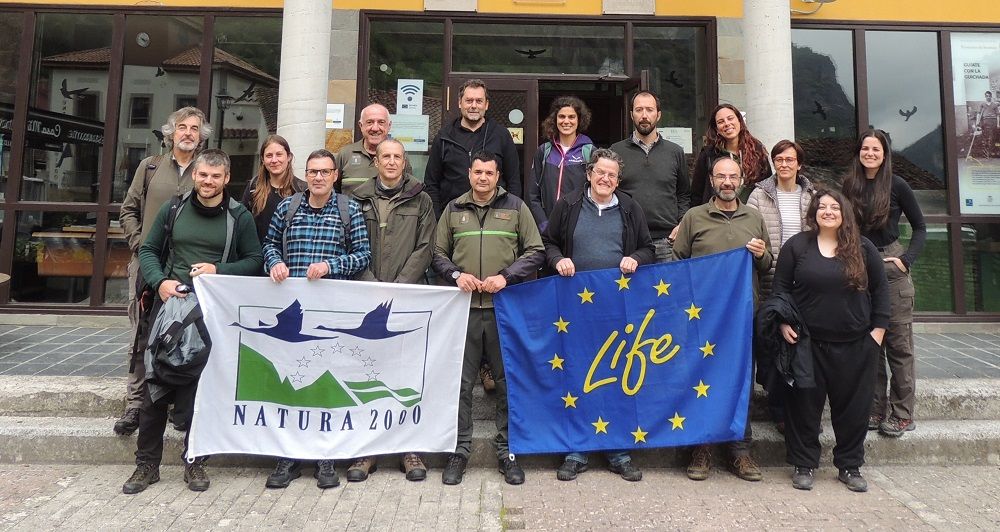
From 22 to 26 May 2023 and within the framework of the LIFE Bears with Future project, an international meeting was held in Somiedo (Asturias) with members of the LIFE ARCPROM project, which develops actions to improve the cohabitation between bears and human activities in three National Parks in Greece (Rodope Mountain Range, Prespa and Pindos) and in the Majella National Park in Italy.

The meeting was highly productive, with active participation by representatives of the Department of the Environment and Territorial Cohesion of the Principality of Asturias, the Somiedo Natural Park director, the wildlife rangers of the Brown Bear patrols of Asturias, the Biodiversity Research Institute (of the Higher Council for Scientific Research – Oviedo University –  Principality of Asturias) and the Bear Foundation  of Asturias.

In-depth analyses of the damages caused by brown bears to economic activities were explored. This included the intervention by the Brown Bear Patrol of the Principality of Asturias in a true certified case of a wolf/bear attack in a livestock farm. The complete process of how the agents obtained samples and analysed different evidence in order to determine which species had caused the attack was observed. Those assisting the meeting were able to resolve doubts on the methodologies used and the management of the compensation process for damage by large carnivores in this autonomous region.
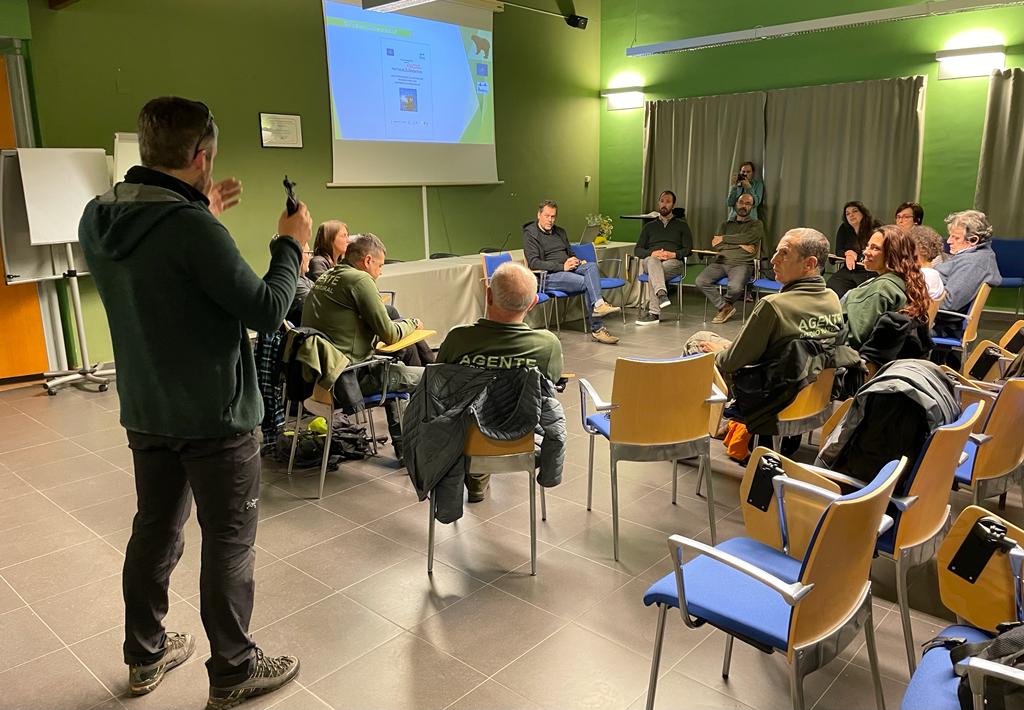
Discussion panel in Pola de Somiedo (Asturias) of the LIFE ARCPROM and Bears wth Future projects. Photo FOP

Furthermore, an intense discussion panel session was held where interesting strategies and management methods were exchanged for dealing with habituated and/or conflictive bears in the three populations in the south of Europe. This meeting is deemed as particularly important as it allowed us to keep in close contact with how work in this aspect is being developed in other countries where the bear population is also increasing. Additionally, in the case of Greece, the bear population is greater than ours, which gives us the possibility to gain an idea of the potential future scenario for the bear in Spain. In Italy the project is centred on the brown bear population in the Apennine Mountains, a small isolated population of around 100 bears, but where for some time work has been underway to avoid habituation by some individuals.
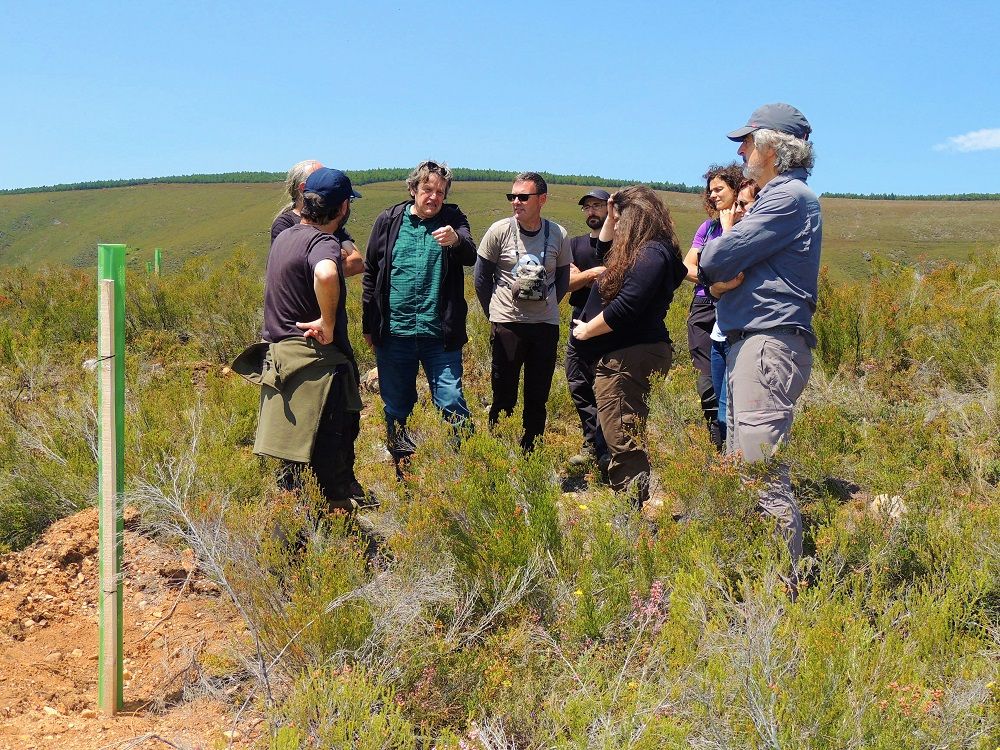
Visit to the plantations of the LIFE Bears with Future project on land belonging to the Neighbourhood Council of Anllares del Sil, León. Photo FOP

The representatives of the LIFE ARCPROM project also showed great interest in the actions being undertaken for adaptation to climate change being undertaken by the LIFE Bears with Future project. Consequently, on one of the days we visited a plantation in Anllares del Sil (León) to explain in situ why and how we are working with the sweet chestnut. The project’s director, Guillermo Palomero and field technician, Luis Fernández, also explained how the selection of terrain responded to earlier studies on the different climate change scenarios. Likewise, the importance of using a proportion of plants grafted with local varieties at risk of disappearing, to favour their adaptation, resistance and fruiting capacity, was explained.

The “Bears with Future” Project, co-financed by the European Union LIFE Project, will be carried out until 2025. It is coordinated by the Brown Bear Foundation in partnership with the Biodiversity Foundation (Ministry for Ecological Transition and Demographic Challenge), and the Natural heritage Foundation of the Castilla y León regional government. The Government of Asturias is co-financer, via the Directorate General for the Environment and Rural Planning, of the Department of Rural Development, Agriculture and Fisheries. Tierra Pura Foundation collaborates technically and co-finances the project.

Share this entry
  • Share on Facebook
  • Share on Twitter
  • Share on Pinterest
  • Share on LinkedIn
  • Share on Tumblr
  • Share on Vk
  • Share on Reddit
  • Share by Mail
https://m.fundacionosopardo.org/wp-content/uploads/2023/06/con-bandera-baja.jpg 532 1000 EditorFOP https://m.fundacionosopardo.org/wp-content/uploads/2019/01/Fundacion_Oso_Logo_1.png EditorFOP2023-05-26 18:31:002023-12-26 18:36:11Experiences interchange with the LIFE ARCPROM project in Pola de Somiedo (Asturias). May 2023

Pages

  • BEAR HOUSES
  • Become “Bears friend”
  • Bioeconomy: Chestnuts, Bears, and Rural Development
  • COEX
  • Cookies policy
  • Donations and legacies
  • FOOTPRINT Program
  • Form: become bears friend
  • HABITAT Program
  • Home
  • Legal Notice
  • LIFE Projects
  • Management body
  • Marco legal
  • Other LIFE Projects
  • Our objectives
  • Our team
  • Privacy Policy
  • Project LIFE bears with future
  • Proyecto LIFE Human Bear Coex
  • Publications
  • Results that leave a footprint
  • Supports
  • Under review
  • URSUS Program
  • URSUS Program
  • We are transparent

Categories

  • Actualidad
  • LIFE Bears with future
  • LIFE Human Bear Coex
  • Private fundations
  • Public administrations and other public entities
  • Socially Responsible Companies
  • Uncategorized

Archive

  • June 2026
  • June 2025
  • June 2024
  • April 2024
  • March 2024
  • December 2023
  • October 2023
  • September 2023
  • July 2023
  • May 2023
  • April 2023
  • February 2023
  • December 2022
  • October 2022
  • September 2022
  • August 2022
  • July 2022
  • June 2022
  • May 2022
  • March 2022
  • February 2022
  • December 2021
  • November 2021
  • October 2021
  • September 2021
  • August 2021
  • June 2021
  • March 2021

FUNDACIÓN OSO PARDO

c/ San Luis 17 4ºA.
39010 Santander – Cantabria
(España)

Tel: +34 942 23 49 00
Fax: +34 942 23 50 48
fop@fundacionosopardo.org

© 2024 FUNDACIÓN OSO PARDO

PRIVACY POLICY
COOKIES POLICY
LEGAL NOTICE

64,966 trees planted during the first campaign of the LIFE Bears with Future....Activities with the Mycological Associations and Federations of the Cantabrian...

Scroll to top

We are using cookies to give you the best experience on our website.

You can find out more about which cookies we are using or switch them off in settings.

Powered by  GDPR Cookie Compliance
Privacy Overview

This website uses cookies so that we can provide you with the best user experience possible. Cookie information is stored in your browser and performs functions such as recognising you when you return to our website and helping our team to understand which sections of the website you find most interesting and useful.

Strictly Necessary Cookies

Strictly Necessary Cookie should be enabled at all times so that we can save your preferences for cookie settings.

If you disable this cookie, we will not be able to save your preferences. This means that every time you visit this website you will need to enable or disable cookies again.